
ContentOps’ Topical Map Tool helps AI understand your website as a connected content system. Improve internal linking, content planning, audits, schema, and topical authority with structured context parameters that eliminate context fragmentation.
You open ChatGPT or Claude and type:
“I need you to help me plan, write, interlink, expand, and audit my website content as one connected system. Use the relationships between pages, identify missing topics, suggest internal links, preserve strategic intent, and make sure the whole site grows coherently instead of as disconnected posts.”
That is not a normal content brief request. It is a context problem and a cry for help. The ContentOps Topical Map Manager solves it by giving AI a structured knowledge graph of your content ecosystem.

[ STADIUMLIGHTS VISUAL CHASSIS ]
Prompting alone isn’t enough
Most AI Gurus on social media preach that you need to improve your prompt engineering skills to get better outputs from AI, but these will give you marginal gains at best.
Prompt engineering is merely the delivery vehicle to your AI. But what’s more valuable, the delivery vehicle or the Cargo?
Your business logic, your voice, your expert insights are all the Cargo that you inject to AI to extract improved and consistent output that makes your brand speak with one voice, that’s interconnected and promotes your brand as a collective so your content ecosystem functions as a whole rather than as disconnected islands.
If you want to truly move the needle with your business’ content plan, improve your topical authority, make your site more easily ingestible for AI citations, and have the AI you use every day actually “see” and “understand” your business, you need the ContentOps Topical Map Manager.
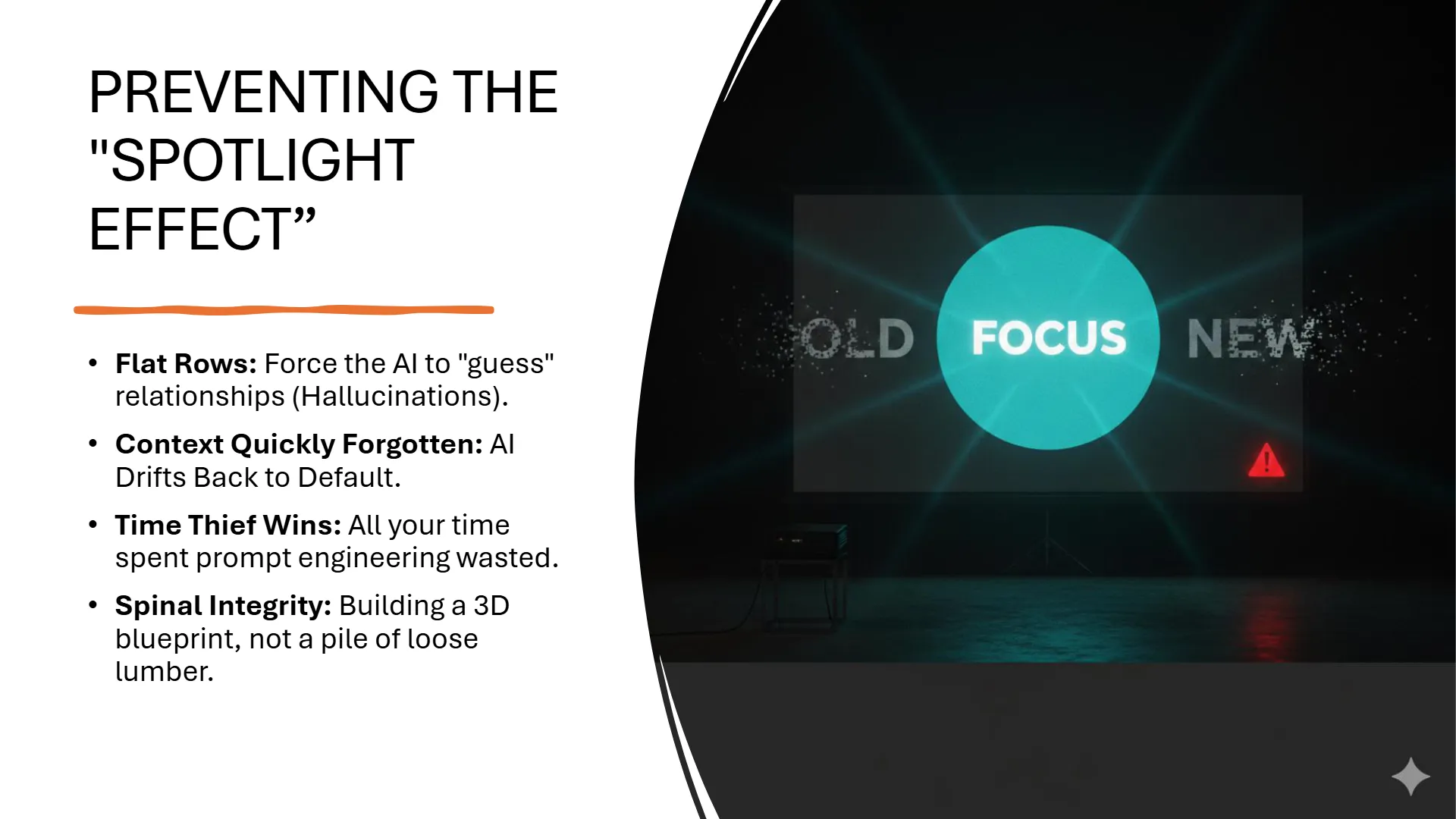
Figure 1: Traditional keyword planning creates fragmented spreadsheets. ContentOps structures your Topical Map as active domain intelligence.
What the ContentOps Topical Manager is
What is ContentOps’ Topical Map Tool & How it differs from market alternatives?
ContentOps’ Topical Map Tool is a living context engine for AI-assisted content strategy. It stores your data about your site as structured nodes, so AI can understand your content universe, reference related posts naturally, and recommend stronger internal linking, better content coverage, and clearer topical authority.
It is meant to be exported and used as a context injection in your content creation chats as well as its global functionality within the application itself.
Most topical maps are planning documents. ContentOps is more like a business logic memory card for your website. It does not just show what to publish — it gives AI the context it needs to write, strategize, and maintain a connected content system as the map grows.
Most topical maps are keyword planning tools that give CSVs or spreadsheets. The ContentOps Topical Map doesn’t do research, rather it holds and manages the state of your site’s posts and pages and exports that state in a JSON file that you drop into your AI chats.
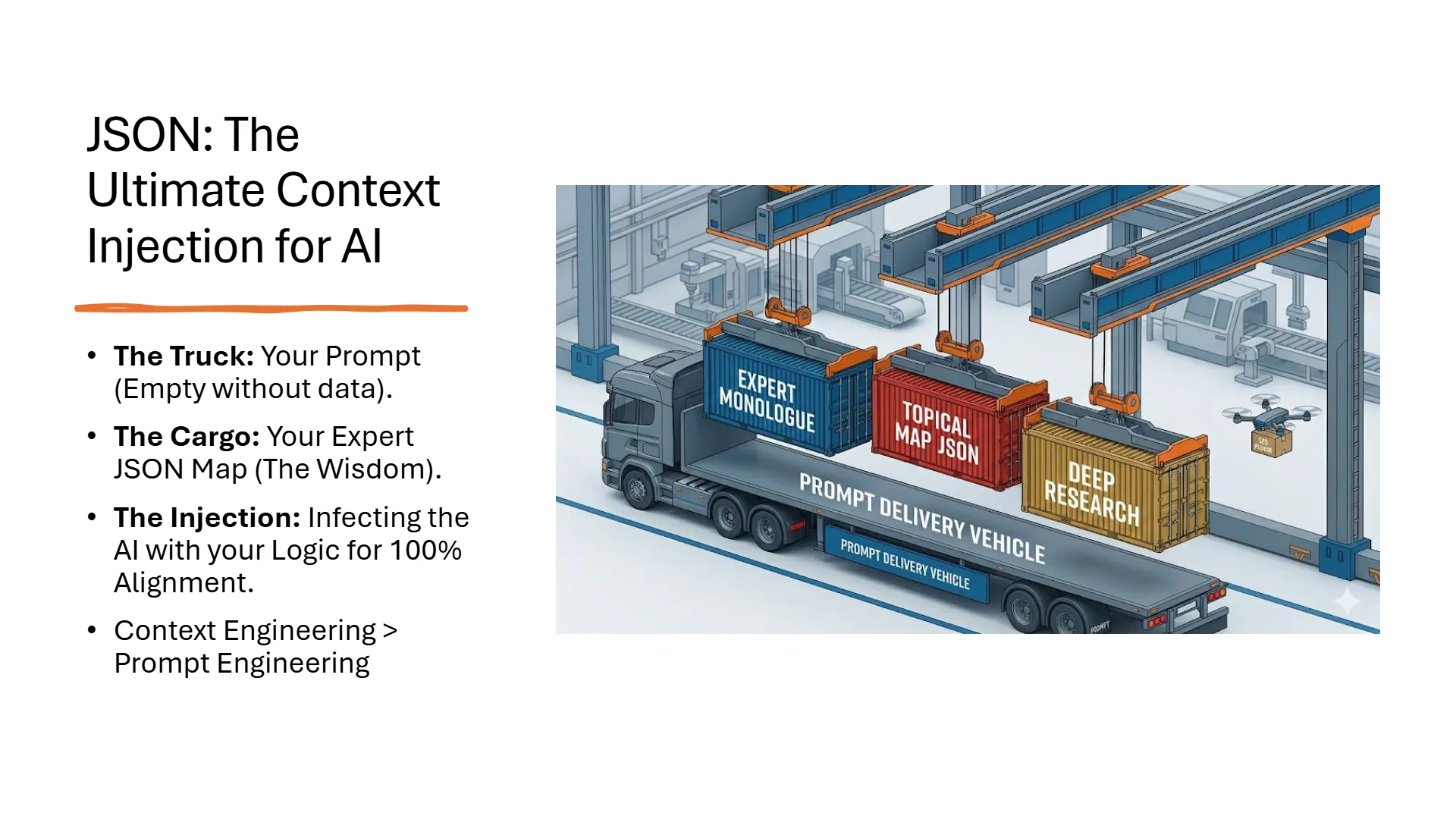
Figure 2: Moving past isolated terms. Connecting your content elements into a unified, machine-readable fortress.
What is the simplest way to describe the map?
It is the control layer between your website and your AI workflows. It stores the business logic of your content so your AI tools can write, link, audit, and expand with much more precision.
Why AI Needs Structured Context
What data does each node contain & Why that matters for AI?
Each node contains much more than a title and keyword. It can hold a live URL, primary keyword, semantic keywords, anchor text options, description, big idea, core and transitional offers, media strategy, internal links, and AI instructions. That gives AI a richer view of each post’s role in the overall system.
What are the context injections and how do they help?
Because AI performs better when it has structured context instead of guesswork. The map lets AI pull exact URLs, related entities, and strategic relationships from a deterministic framework instead of hallucinating connections or inventing links. Review the Help Center Node Architecture Manual to master these foundational parameter settings.
Every data layer of ContentOps is exportable either as copy-to-clipboard or as downloaded .txt files. You drop these into your AI chats as data context injections and get analysis from your AI.
Export the entire topical map or get scoped injections on an individual node. This is the “Stadium Lights” vs the “Spotlight” effect on AI.
All AI Audit Briefs are exportable including the Global Map Audit, Global Schema, Audit Diagnostic Scan, Mission Briefs 1-5, The HTML Wrapper’s draft wrapping function, The HTML Splitter’s text block splitting.
Each exported function either serves as a data context injection for analysis or as a publishing accelerator.
How it Improves AI Writing, Linking, and Site Coherence
How does the map help with internal linking?
The map acts like a switchboard between content nodes. Since each page knows its relationships to other pages, AI can identify natural interlinking opportunities, recommend anchor text, and suggest where authority should flow across the site.
When working with a writing draft in your AI chat, use the ContentOps HTML Wrapper function to encode the post in HTML. Import that HTML-wrapped draft back into your chat along with the topical map, and prompt your AI to find and apply the relative internal links. This works much better with an HTML-wrapped draft than it does with raw text.
The Harvester is the map’s link maintenance engine. You can paste HTML from a live page or a draft, and it extracts the internal links, matches them against URLs already stored in the map, and helps you keep your content graph accurate as the site evolves. Learn more about the mechanics behind this automation in our guide on Calibrating Anchor Text Options.
It prevents link drift. As your site grows, pages get updated, links change, and relationships decay. The Harvester helps the map stay aligned with reality so the AI is always working from current information.

Figure 3: System-Wide Sensing. Preventing AI amnesia by anchoring content creation to a consistent, persistent knowledge graph.
How does the topical map help with content creation?
It helps AI write content that naturally connects to the rest of your site. Because the map already contains the strategic relationships, the AI can produce content that references related posts, reinforces the right entities, and avoids creating disconnected pages.
How does the topical map help SlideShift and the Audit Suite?
The map gives SlideShift the contextual brief it needs to generate better outputs. A user can pull the relevant node context, then use SlideShift to create optimized alt text, captions, and HTML snippets that match the topic and strategic intent of that page. For an over-the-shoulder operational framework, see the step-by-step instructions in the SlideShift Visual Dominance Tutorial.
It gives the Audit Suite a source of truth. Instead of auditing pages in isolation, the tool can compare a page’s live HTML against the broader map to identify structural gaps, linking opportunities, and missing semantic support.
How it Audits and Diagnoses the Content System
What is the global map audit?
The global map audit is the high-level AI diagnostic for the whole system. It identifies major coverage gaps, weak clusters, orphaned pages, island nodes, and the highest-impact next steps so you know where to focus your attention. Review the technical implementation specifications inside the Global Map Audit Mechanics Manual.
It surfaces the most important actions first, such as which pages need support, which topics are underdeveloped, where internal linking is weak, and where you have missing content that should be built out next.
Island nodes are pages that exist, but are poorly connected to the rest of the map. They may have useful content, but they are not receiving enough internal support or passing enough context to the rest of the system.

Figure 4: The Global Audit. Detecting gaps, resolving island nodes, and wiring a defensive semantic phalanx.
How does it help with the Audit Suite and What are the Audit Missions 2-5?
The map powers the Audit Suite’s AI mission briefs. It lets the audit compare a page’s HTML against the structured map, so the AI can recommend internal links, identify missing support, surface expansion opportunities, and diagnose competitive gaps.
Mission 2 recommends outbound internal links. It checks the page’s HTML against the map and suggests which related nodes should be linked out from the post, along with appropriate anchor text. This allows you to “Wire Up” your posts into the broader ecosystem of the map.
Mission 3 does the reverse of Mission 2. It looks at the submitted HTML and asks which existing nodes should be linking into this page to pass authority and strengthen the page’s place in the map. This “Powers Up” the post by passing authority signals into the post, increasing its topical authority.
Mission 4 finds map expansion opportunities. It looks for unsupported or underdeveloped ideas in the page’s content and suggests new nodes that should be created to capture those concepts properly.
Additionally, this mission can also be run on a competitor’s post. Like Mission 5, you run their HTML against your map and find their unsupported concepts. You make posts on those concepts, strengthening your map and that node’s topical authority over that of your competitor’s.
Mission 5 runs an opposition gap analysis. It compares a competitor’s page against your topical map to find where they have coverage you lack, where your structure is stronger, and where you can hijack the opportunity with a better node.
All of these Briefs from Missions 1-5 are copiable and exportable as .txt files. That way, you can drop multiple briefs into an AI chat and get a more comprehensive analysis. These exported briefs make ContentOps a context injection powerhouse.
How it Expands the Map & Grows Topical Authority
At ContentOps, we recommend expanding your map from the inside out. Topics are built on concepts and sub-concepts. You can fully explain these concepts, but to add validation, you also need to make supporting posts out of the sub-concepts. This creates a strong validation layer and the formation of clusters around your pillar content.
What is map expansion?
Map expansion is how ContentOps helps you grow the system from the inside out. When a page contains an important idea that does not yet have its own dedicated node, the AI can surface that shadow concept so you can create a new post and deepen the cluster.
Shadow concepts are meaningful topics mentioned in a page that deserve their own content node. They represent the missing pieces of a cluster and help you identify where the topical map should expand next.
How the Map Supports Schema Generation and Machine Readability
How does global schema generation work & why it matters?
The map can generate JSON-LD schema for the whole site from the same structured data used in the topical map. That means the website’s visible architecture and its machine-readable architecture stay aligned. Operators can view the system wiring logic inside the Global vs. Individual Schema Blueprint.
Because search engines and AI systems understand structured data more reliably than loose prose. A clean global schema helps turn the site into a more coherent entity, improving how AI systems interpret the brand, its pages, and their relationships.
Can each node generate its own schema too?
Yes. Each node can generate its own JSON-LD schema, which completes the circuit between the map and the page. That gives you scoped schema for individual pages and global schema for the site as a whole.
Why the Topical Map Needs to be a Living System
Why does ContentOps need a living map?
Because content systems are always changing. New pages are added, old pages are updated, topics shift, and internal links evolve. A living map keeps AI aligned with the current business logic of the site instead of stale assumptions. Setup details can be explored within the Flash Inject Ingestion Tutorial.

Figure 5: The living memory card. Transitioning from scattered folders to a deterministic, future-proof SEO engine.
What is the main idea behind the whole system?
It is the main idea is simple: the map gives AI the data in context, your AI helps maintain and expand the map, while you act as the executor between the map and your AI, so the entire workflow becomes more connected over time. That creates a symbiotic system where strategy, writing, auditing, schema, and internal linking all reinforce each other.
It solves the gap between content planning and content execution. Most teams know what they want to rank for, but they struggle to maintain the relationships, context, and structure needed for AI-era content systems. ContentOps turns that into an operational framework.
Why would a founder or business owner care?
Because it reduces content chaos. Instead of managing disconnected pages, a founder gets a structured system that helps AI write smarter content, build better links, surface gaps, and keep the site aligned with the company’s actual strategy.
The map is a way to download the intricacies of each post into a state management system that can be easily exported and injected into AI. The founder or content creator no longer needs to hold the entire state of their content ecosystem in their head, relieving their own mental bandwidth while increasing the bandwidth of their AI strategy, auditing, writing, and social media chats.
If you want your AI to understand your business, you need a system that gives it that context.
🧱 The Hindsight Insight (The Architect’s Regret):
“If I could do it all over again, I would stop treating AI like a magic writing tool and start treating it like a system that needs structured context to do useful work. I would build the map first, give the AI the business logic behind the website, and let every prompt start from a stronger foundation.”