

Why Does Google Ranking Keep Changing? Inside the Wink Protocol
Most creators treat a drop in Google Search Console (GSC) like a death certificate. They see a red arrow, panic, and immediately start “keyword stuffing” or buying more useless apps from the Tool Overlord. They think SEO is a static game—a set-it-and-forget-it chore. That mindset is the fast track to Symptomless Death.
Here’s the direct answer. Google ranking keeps changing because the algorithm is actively testing your content against neighboring keywords and adjacent search intent, not because you’ve been penalized. A rank that moves is Google mid-conversation with your page, and once you can read that conversation, a shift stops being a crisis and starts being a cue.
The truth? When you understand why Google ranking keeps changing, you realize this movement is actually a conversation—it’s the Robot Librarian making eye contact from across the room. It’s a signal that requires Neo Vision to interpret, matching your content’s structure against the exact query Google is testing it on, instead of running through a blind troubleshooting checklist.
What a Ranking Drop Actually Costs You
The external cost of that panic is easy to name. There you are, reading your queries report in GSC, and you see the ranking for an important post has dropped. But sitting right next to it, a new query for that same post has jumped in out of nowhere, stuck on page two. Both queries are just out of range of the results that would actually send you traffic, because they’re fighting each other for the same slot. That’s Google winking at you.
The internal cost is quieter, the compulsive GSC refresh four times a day, hunting for a stability the algorithm was never built to give you. The philosophical cost is the one nobody says out loud, the creeping suspicion that a machine you don’t understand has decided your years of expertise aren’t worth surfacing to anyone.
The Misguidance Counselor’s Lie
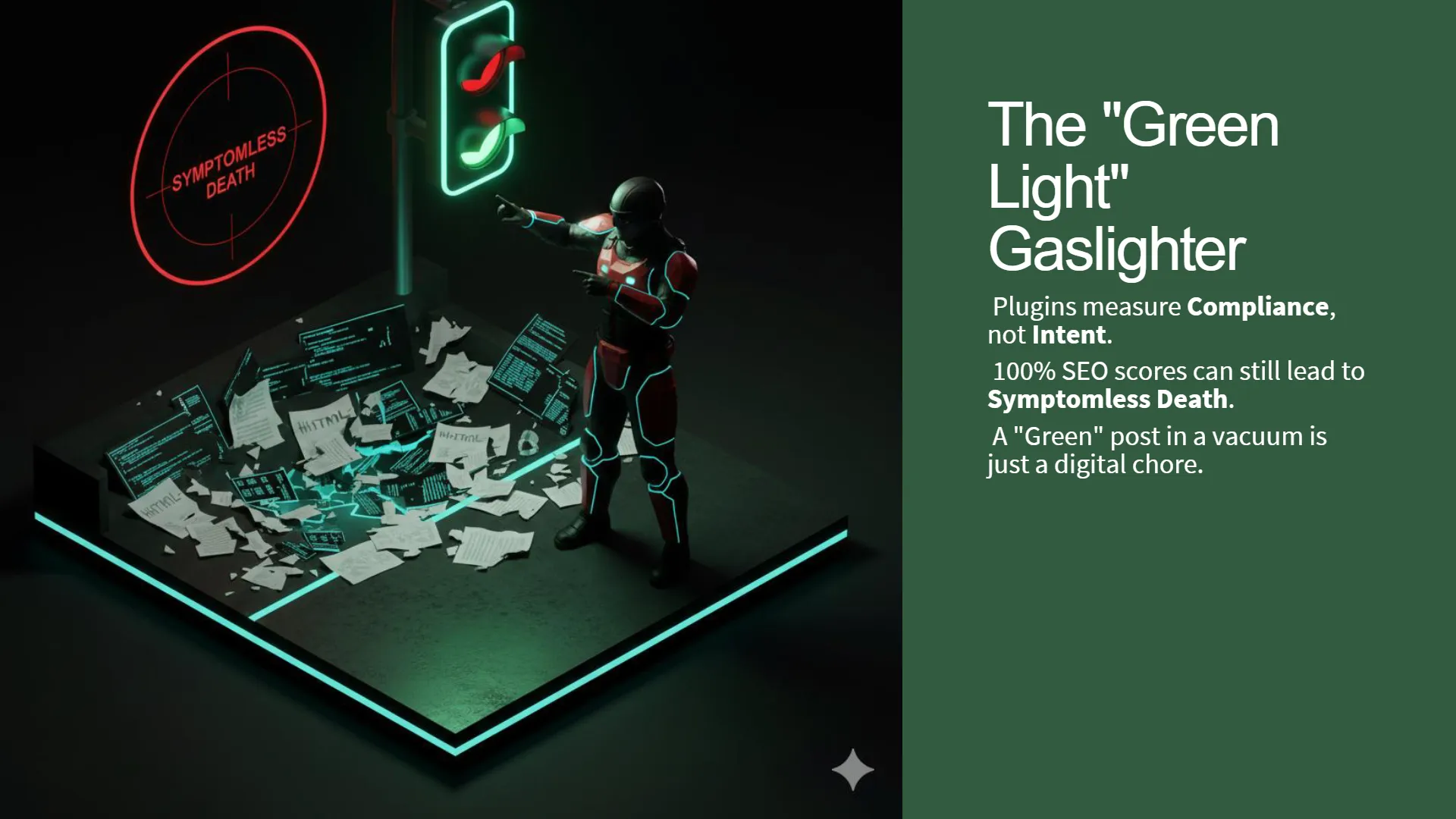
The Misguidance Counselor tells you to obsess over “Search Volume” and follow the “Green Lights” in your legacy plugins. They want you to believe that if you just follow the compliance checklist, you’ll win. But those green lights are gaslighting you. That gap between a clean compliance score and an actual ranking is exactly why your SEO checklist isn’t working.
I’ve seen posts stay green for three years while producing zero results. GSC wouldn’t even index them until I whipped out my AI Utility Belt and scanned them with Neo Vision. For years I couldn’t explain it. The green lights work in a vacuum, plain and simple. They don’t tell you that Google has moved on from being a static filing cabinet; it’s now a living entity reacting to you. When you resubmit a post and nothing happens, it’s not because SEO is dead—it’s because you didn’t answer the machine winks.
[INTERVENTION REPORT]
Want to learn how to make sure your AI audits your posts the way Google actually crawls them? Read our full live case study: The Whitepaper: Semantic SEO Content Revival. We document exactly how we turned a 3-year-dead post into a number 1 ranking using a structured Topic Route Architecture to eliminate the compute tax.
So Why Does Google Ranking Keep Changing?
Because the algorithm isn’t scoring you once and walking away. It’s running a live experiment, moving your post up and down against neighboring queries to see which exact intent you actually satisfy. That test is what shows up in Search Console as volatility, and it’s the mechanism the rest of this piece walks through in detail.
The Retrieval Phase: What Is “Bracket Matching”?
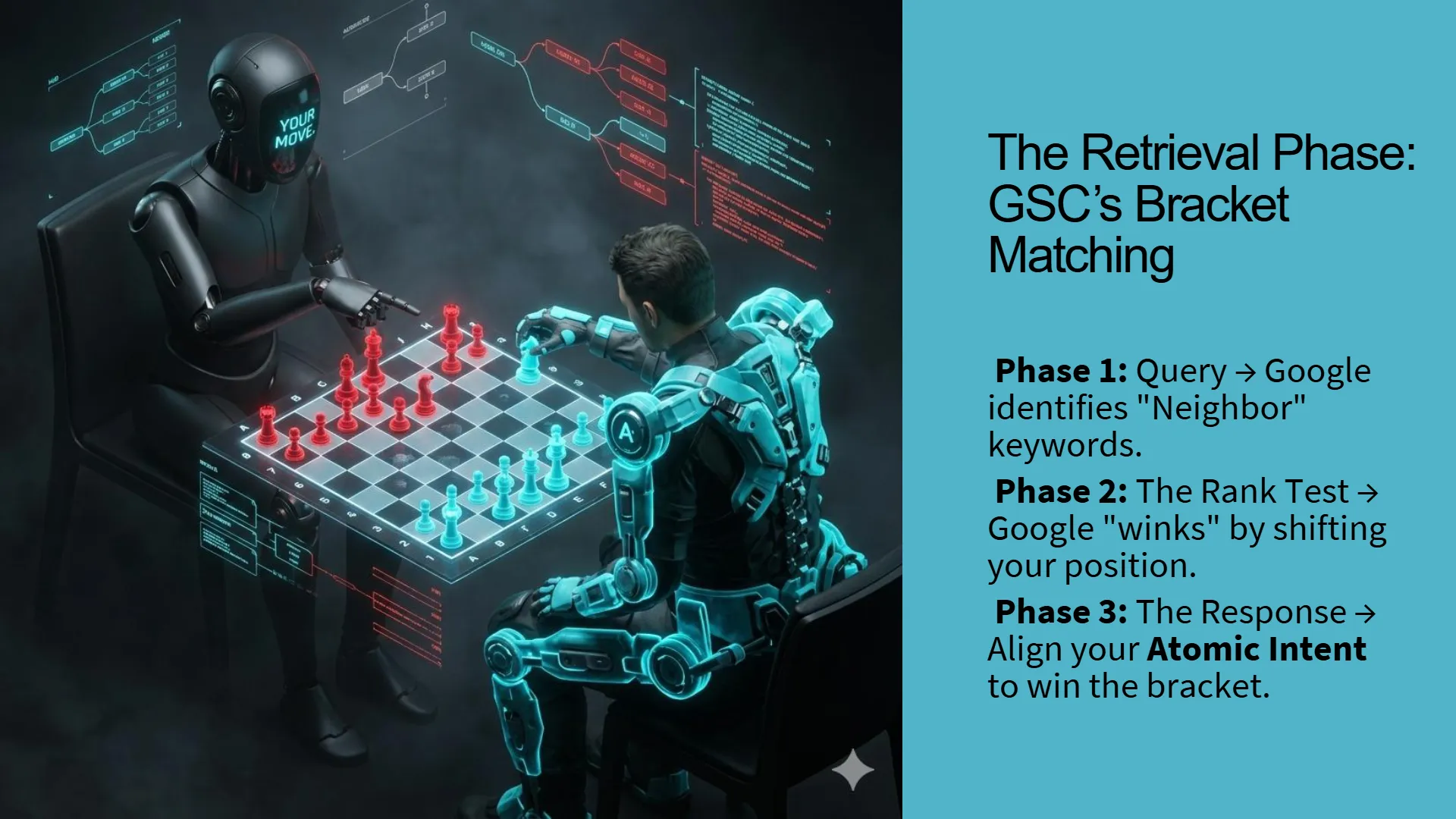
Google’s LLM-driven crawlers don’t just look for strings of text, they perform Bracket Matching.
This is the iterative phase where Google’s machines test your content against “neighbor” keywords to determine what you actually rank for. They are moving you up and down the pecking order to see how the audience reacts to your depth, which is the real mechanic behind why Google ranking keeps changing under a post you haven’t touched. If you have built Scalable Authority via Content Ops Architecture, the machine sees a Sovereign Authority. If your posts are just isolated islands lacking a clear topical map for semantic seo, you fail the bracket test.
Why Is Google Ranking Dropping? The Wink Mechanics Behind It
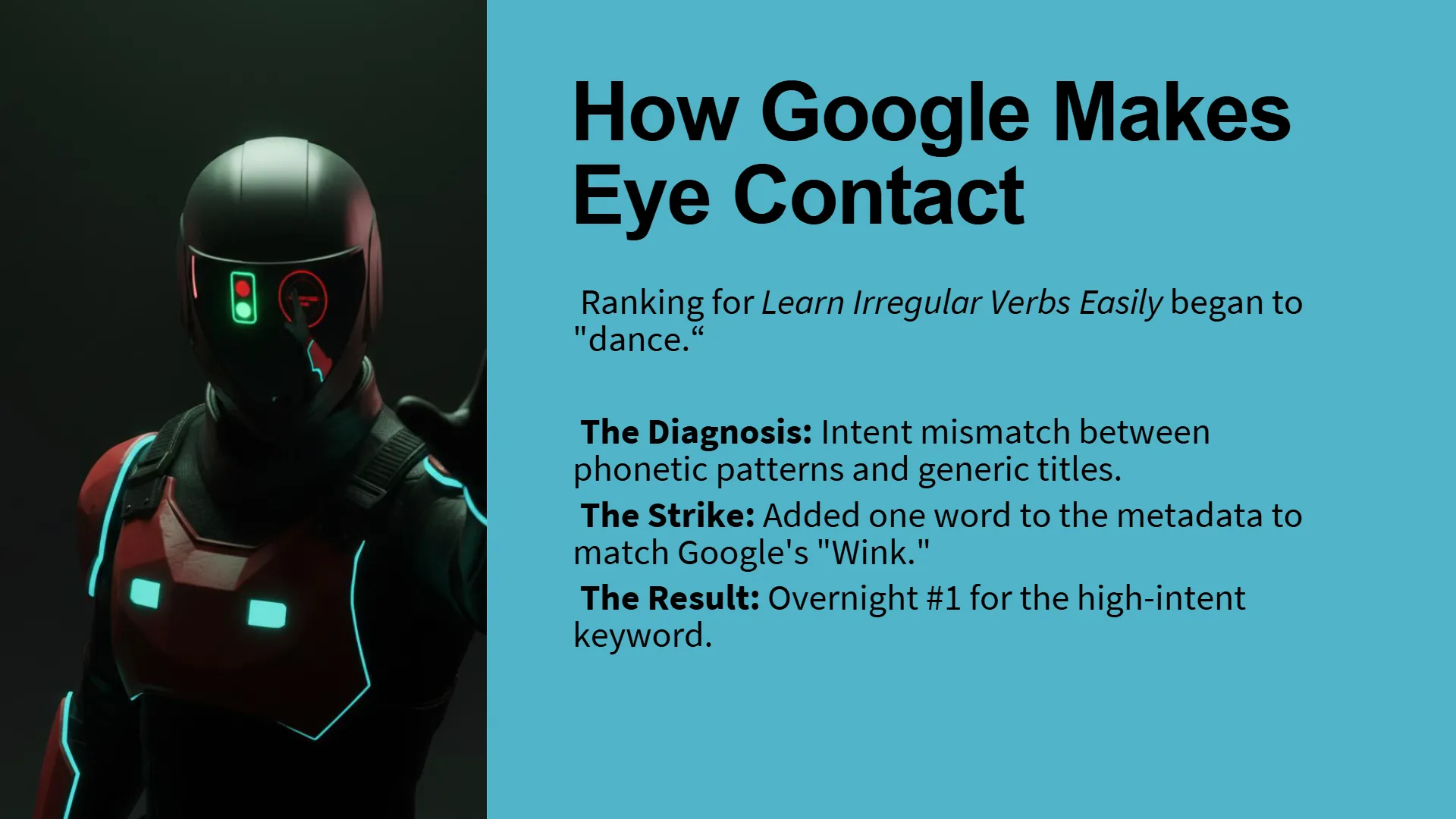
I learned this through “blood on the tracks” with my own content. I had a post titled Learn Irregular Verbs Easily. It had ranked well initially, but then Google started playing with the position.
That volatility was the machine wink in action, the clearest sign yet of why Google ranking keeps changing under content that hasn’t changed at all. Google was clearing its throat, telling me I was close, but not quite matching the Atomic Intent. I didn’t need more words, I needed a Surgical Strike. By adding one single word to the keyword to narrow the framing, the post went into the top three overnight, for the new keyword that Google was signaling.
Listening to the Machine Logic
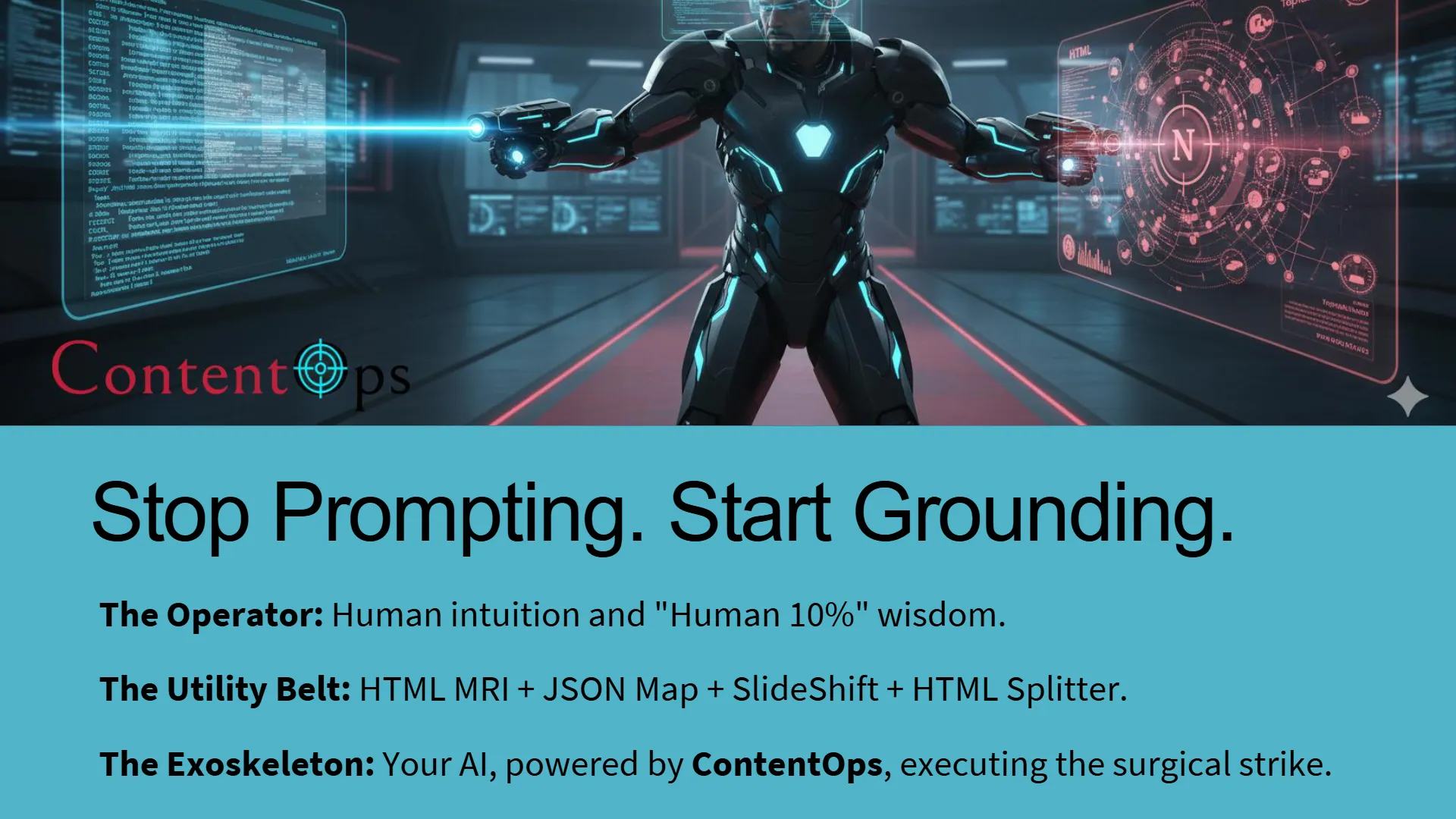
I stopped guessing what I thought the post was about and started listening to what the machine told me it actually was. If I’m being honest, I couldn’t have done it without my personally designed AI “Batman” Utility Belt. I use it to show my AI the post in the same way that Google sees it.
I finally stopped treating my AI like a 6th-grade English teacher, correcting my “essay writing,” and started using it the way I actually needed to, a sovereign move. Somewhere in that process, GSC stopped being a scoreboard and started being a conversation. Movement wasn’t failure, it was the machine asking me to clarify my brilliance.
Atomic Intent Alignment: Reclaiming Your Spot in the Bracket
To win the counter-attack, you must move from “Keyword Decoration” (stuffing for the Green Lights) to Sovereign Authority. When someone knocks you off the top spot, they’ve made a move. You don’t sit there and take it.
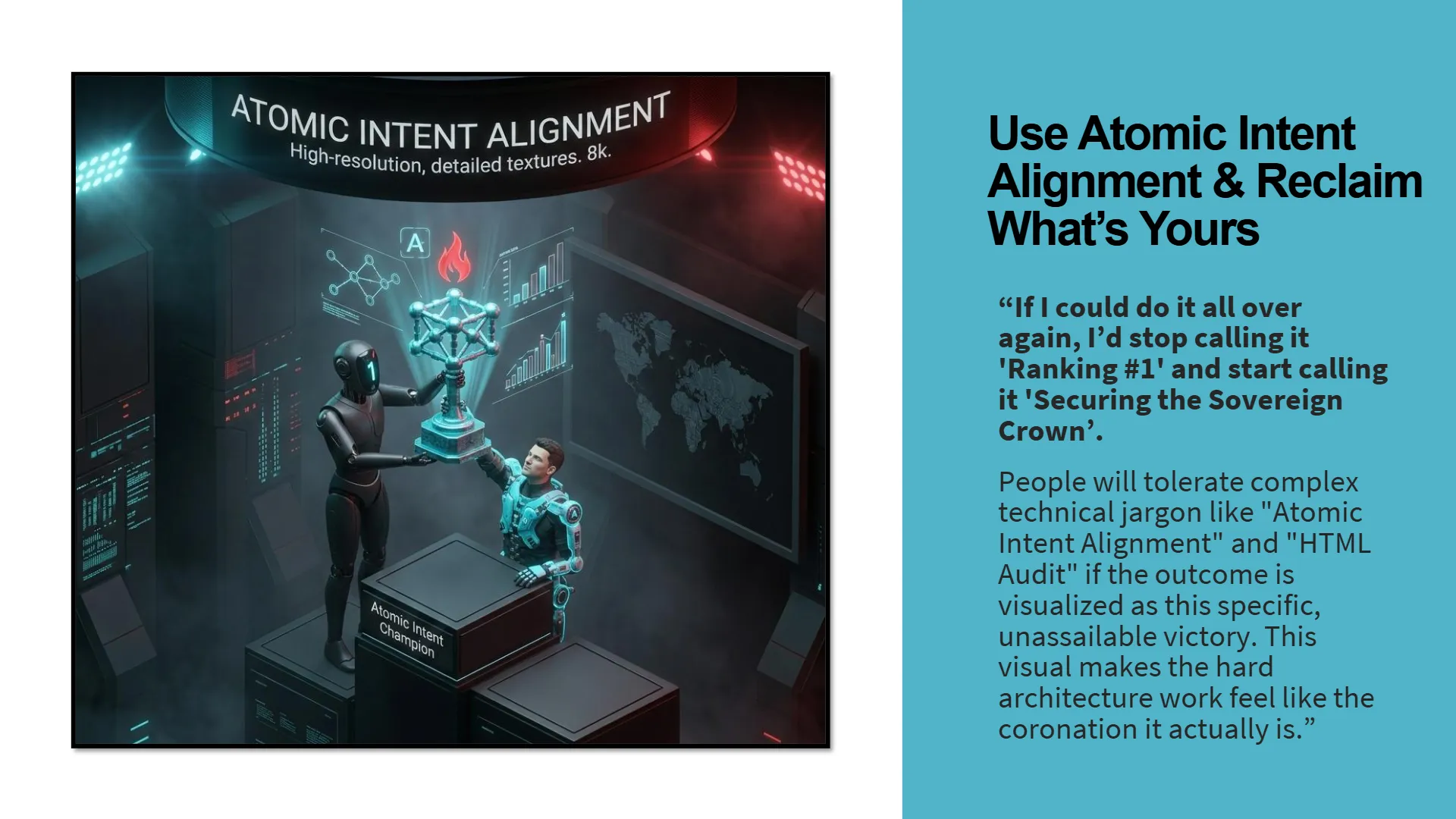
You execute a rigorous, code-level competitor gap analysis on their “fortress” and yours. You use Neo Vision to see the “broken bones” in your structure. You ground your AI. If you ask a generic AI for SEO advice, you get a Vending Machine response. But if you ground that AI in your Topical Map + an HTML audit, it can see where your reinforcements are hidden (your related posts) and call them into the phalanx to execute an explicit atomic intent alignment (Spartans! Prepare for Sovereignty!).
What Affects Google Search Ranking (And What Doesn’t)
Keyword density doesn’t move the needle here, and neither does a green compliance score. What actually affects Google search ranking is whether your content answers one specific intent precisely enough, and whether the rest of your site backs that answer up with a real Topical Map instead of a scatter of Island Nodes with no path between them. Chase precision, not volume, and the volatility you’re seeing in GSC starts looking a lot less random.
FAQ: What Ranking Changes Actually Mean
What do search ranking changes mean?
Most of the time, a ranking change means Google is testing your page against a slightly different query than the one you were aiming for. It’s not a verdict, it’s a probe, and the direction it settles in tells you which intent you actually won.
Why does Google ranking keep changing?
Because the algorithm re-tests pages continuously against neighboring keywords, not just once at publish time. A post that never moves usually isn’t stable, it’s just not being tested against anything close enough to matter yet.
Why is Google ranking dropping?
A drop by itself isn’t a penalty signal. It usually means a competitor sharpened their intent match, or Google is trialing your page against a narrower query where you haven’t yet made your case as clearly.
Is a ranking drop a penalty or a signal?
It’s almost always a signal, not a penalty. Actual penalties come with a manual action notice in Search Console. A quiet drop with no notice is Google asking a sharper question than the one your page currently answers.
Does one keyword dropping mean my page is failing?
No. One keyword losing ground while the page holds or gains on adjacent terms usually means the bracket test found a better-matched neighbor for that specific phrase, not that the page overall is failing.
How do I increase my Google search ranking?
Start by reading what GSC is already telling you instead of adding more words. Run a free HTML audit against the page in question, find the neighboring query it’s actually winning, and narrow your framing to match it.
Learn How to Read the Signals GSC Sends You
“When was the last time you actually performed a data-extraction on your GSC Reports—or are they just sitting in your inbox, unread, because you don’t know what to do with the signal?”
For years, I let those reports sit unopened. I was a victim of the Time Thief, ignoring the data simply because I didn’t have the tools to translate machine-logic into action. I let the rot set in, and Symptomless Death ensued.
If your GSC is “winking” at you but you lack the Neo Vision to read the signal, you are flying blind. Don’t wait until your traffic hits zero to start caring. Run an automated client-side data sweep on your DOM structure and see exactly where your authority leaks are hiding.
The Hindsight Insight (The Architect’s Regret): “If I could do it all over again, I would have stopped looking for ‘SEO Secrets’ and started looking for ‘Surgical Systems.’ The feeling of knowing exactly what to fix, and why, is worth more than any ‘Green Light’ plugin ever gave me. Google isn’t the enemy, it’s a partner that only speaks in signals. Learn the language, or stay invisible.”