
How I Built a StoryBrand Chat That Puts AI in My Corner
For years, my English grammar lessons were correct and dry. StoryBrand turned them into stories with villains my students already recognised from their own struggles. But what actually changed the work was not the framework itself. It was having AI grounded in the framework — a chat that finally got my angle and took my side.
I am not StoryBrand certified. I am a teacher who read the book, listened to the audiobook between sessions, and built a chat that walked me through it one question at a time. That chat became the first domino in everything that followed from the villains, the vocabulary, the content map, the whole system.
This post shows you how to build the same thing. You’re not building a chat that knows StoryBrand in the abstract, but a chat that knows your StoryBrand from your heroes, your villains, and your stakes, so it stops arguing every side and starts writing in your favor.
Part of what makes 100% AI-generated content generic is that it doesn’t have an opinion and these models are trained to be balanced. If you want a strategest and an advocate in your corner, you need to teach AI your audience’s story and assign your AI the co-role of guide tha you and it will share.
What StoryBrand Did to My English Blog
Correct content with no one to fight
Before StoryBrand, my Native 1 lessons explained grammar with nuanced lessons that mirrored my personal teaching style. I began using AI to do the writing, based on my input and the writing prompt. The writing was passable, but the problem was that my AI writing chats just had no one to fight. A lesson on advanced conditionals was a lesson on advanced conditionals. Accurate, useful, forgettable.
Giving every lesson a villain
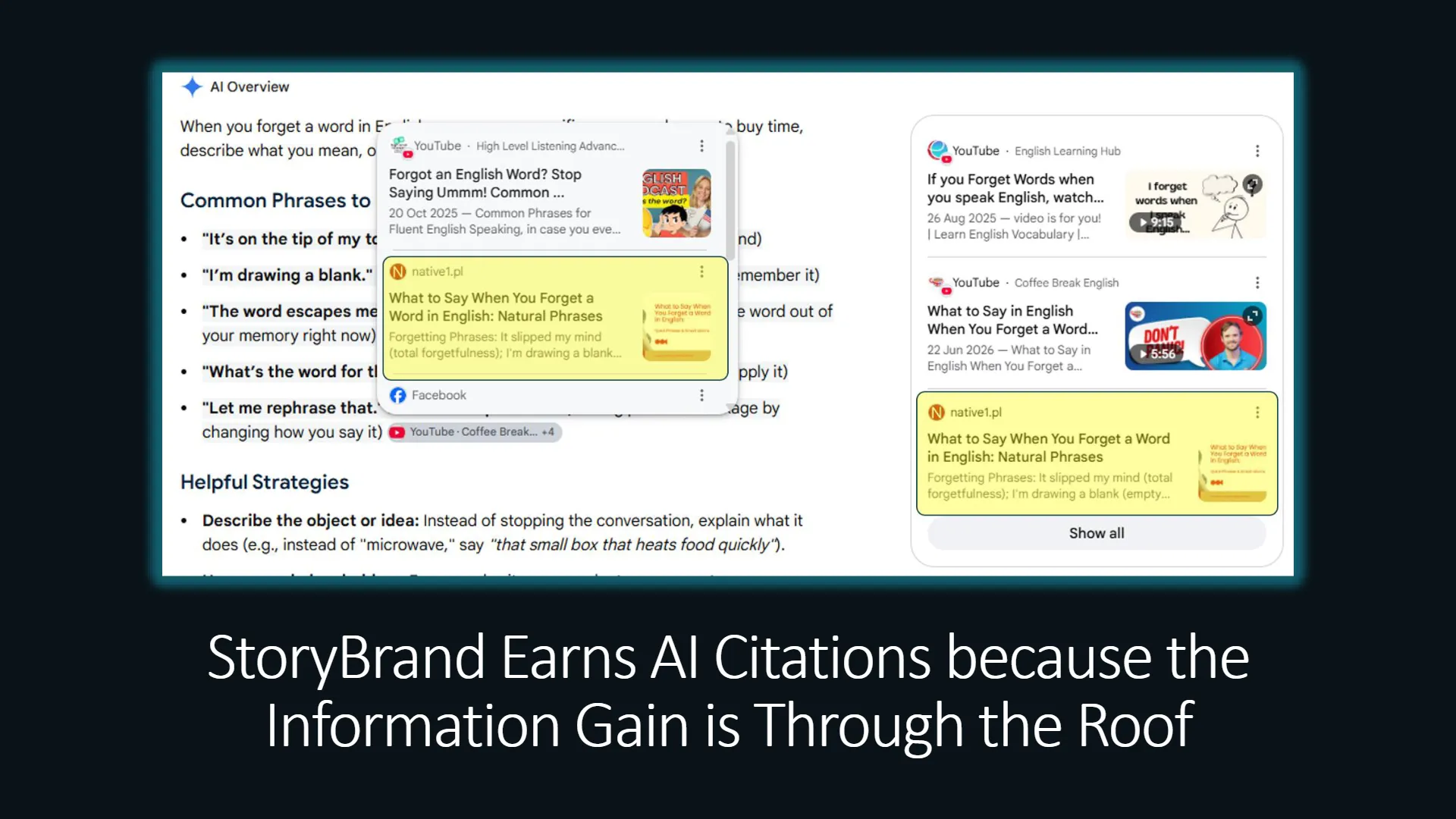
StoryBrand gave every lesson a villain. The Vocabulary Void for the student whose mind goes blank mid-sentence, just like a void in space. The Confidence Crusher for the student who stopped speaking English after one bad meeting. The Grammar Gremlins for the ones who thought they had finally sorted the tenses and then tripped over an exception the next morning. Once you have a villain, the lesson is not about grammar anymore. It is about fighting something the student already feels.
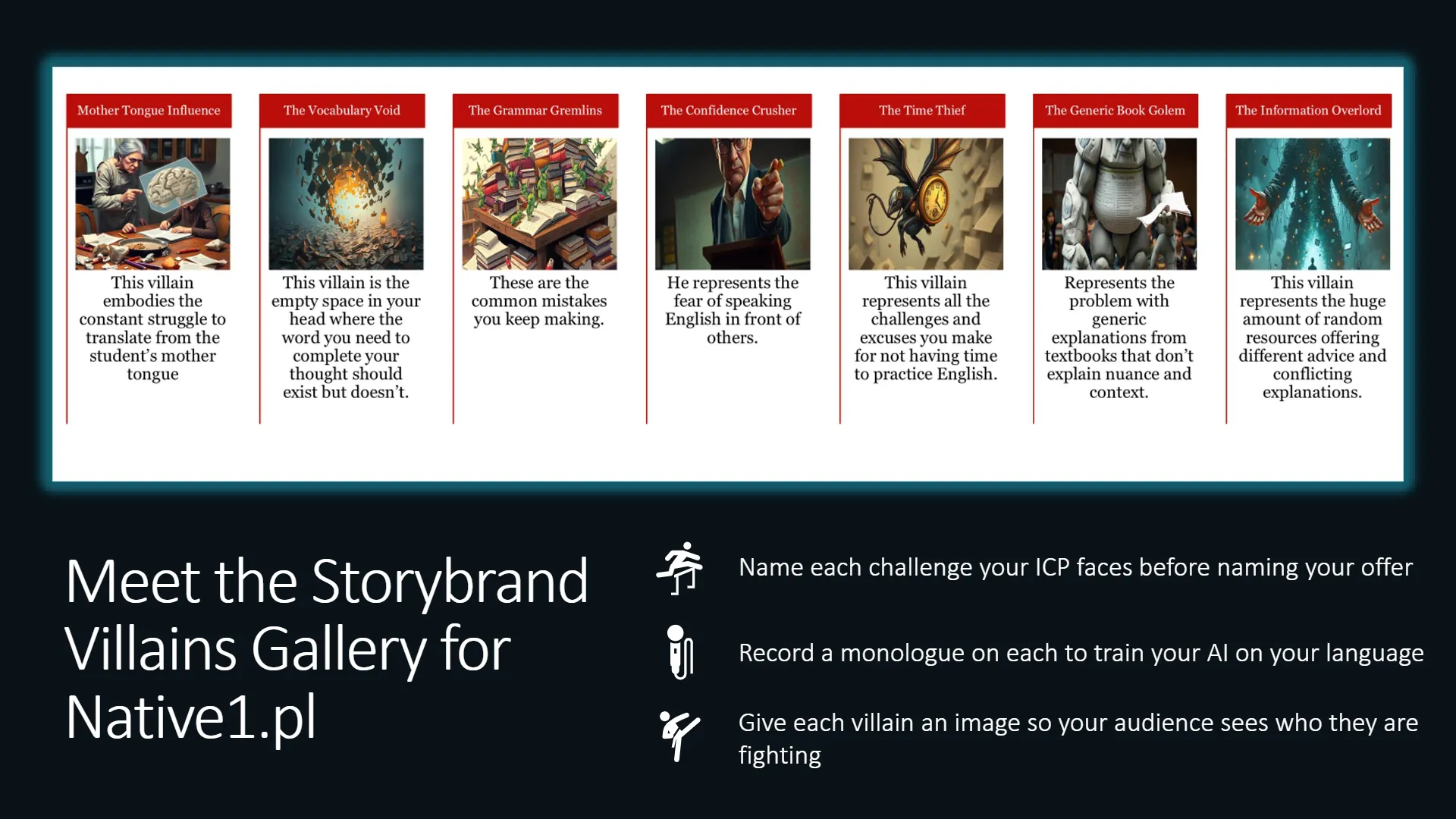
The lesson on what to say when you forget a word in English is the clearest example. The structure reads like a StoryBrand page in miniature. The Vocabulary Void and the Confidence Crusher are the villains. “The Blackout” names the problem, which is that moment when your mind empties and you stand there in silence. A detective-and-witness podcast framing shows the plan. “The Cure” separates the horizontal vocabulary approach from the band-aid fix of just memorising more words.
What a StoryBrand-structured lesson earns from AI
That page now gets steady monthly traffic and it earned a Google AI Overview citation for “helpful phrases to buy time when you forget a word in English.” That is what StoryBrand for AI writing looks like in practice. You end up with a structured argument that AI can parse, summarise, and cite, because it is not just content, it is a story with a shape.
| Old heading | Villain-framed version |
|---|---|
| Advanced Zero Conditional Structures | Why the Grammar Gremlins Win Every Time You Use a Zero Conditional Wrong |
| Vocabulary Building Strategies | Defeating the Vocabulary Void: What to Say When Your Mind Goes Blank |
| How to Sound More Natural in English | The Confidence Crusher and How Native Speakers Actually Fill Silence |
The Framework Was Not What Made It Work
Why a role prompt gives you StoryBrand but not your StoryBrand
The first thing most people do when they want StoryBrand output from their AI is write a role prompt. Something like: “You are an expert StoryBrand copywriter.” That gives the AI StoryBrand vocabulary and structure, but it gives it none of your story. It knows the framework. It does not know your heroes, your specific villains, or why your version of the problem is different from everyone else explaining the same category. It is those specifics that grounds your AI in your specific story.
A framework without your story still argues every side
A chat that only knows the framework still argues every side. It will help you write a villain, then pivot to why the villain has a point. It will name a hero, then remind you to consider alternative perspectives. It is balanced when you need it to be in your corner.
The corner crew versus the commentator
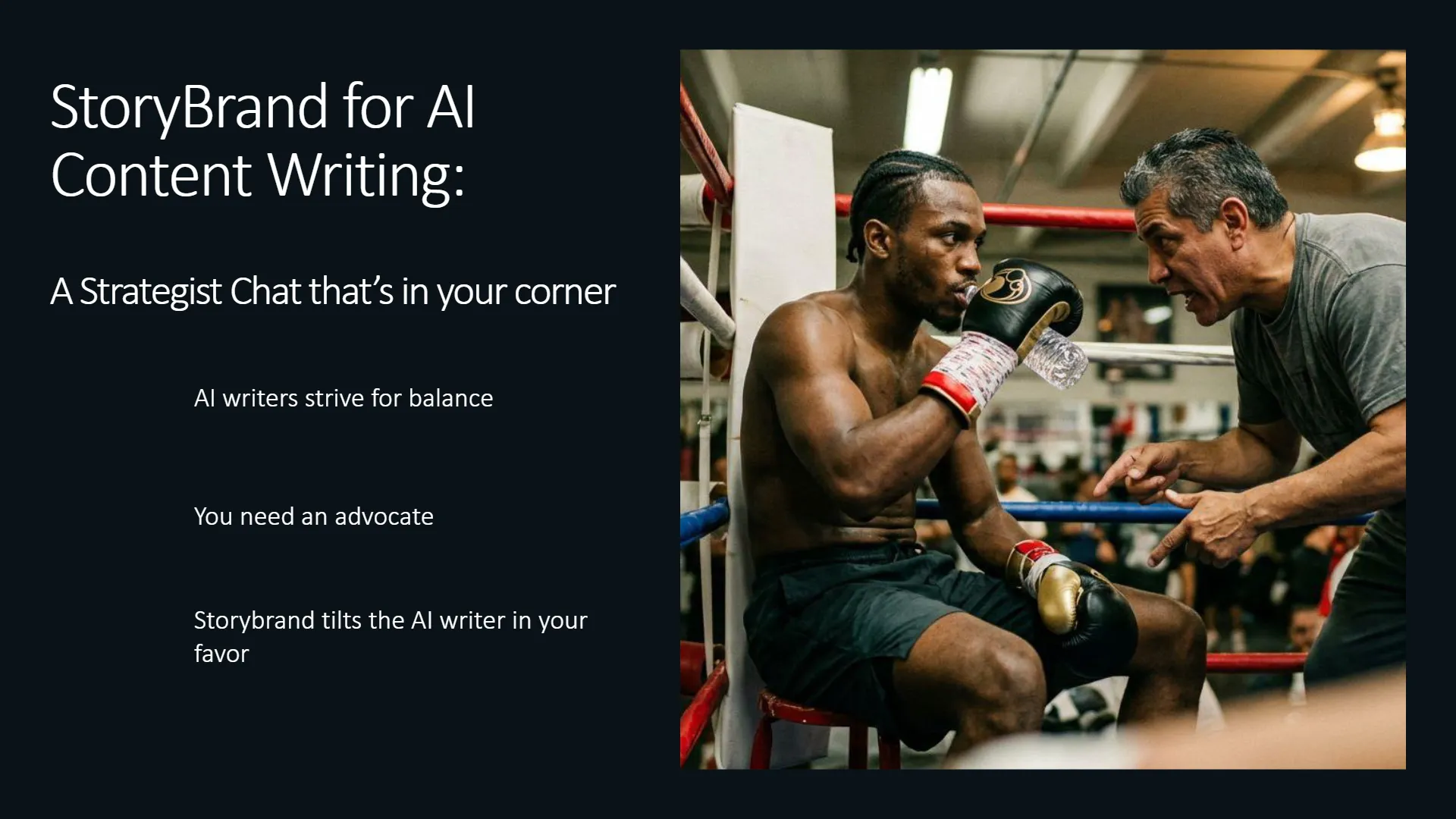
Think of a boxer’s corner. A good corner crew does not give generic boxing advice. They know this fighter, this history, these tendencies, and these weaknesses. Every instruction they give between rounds is specific to what they know about this person in this fight. That is what a StoryBrand chat built around your stories does. It stops giving you balanced output and starts giving you advice that fits your situation. Context engineering is what makes that possible and a role prompt alone is not context engineering.
By grounding your AI in that exact story, it not only “knows” its role, it becomes that role and pushes your narrative at every chance.
How to Build a StoryBrand Strategist Chat
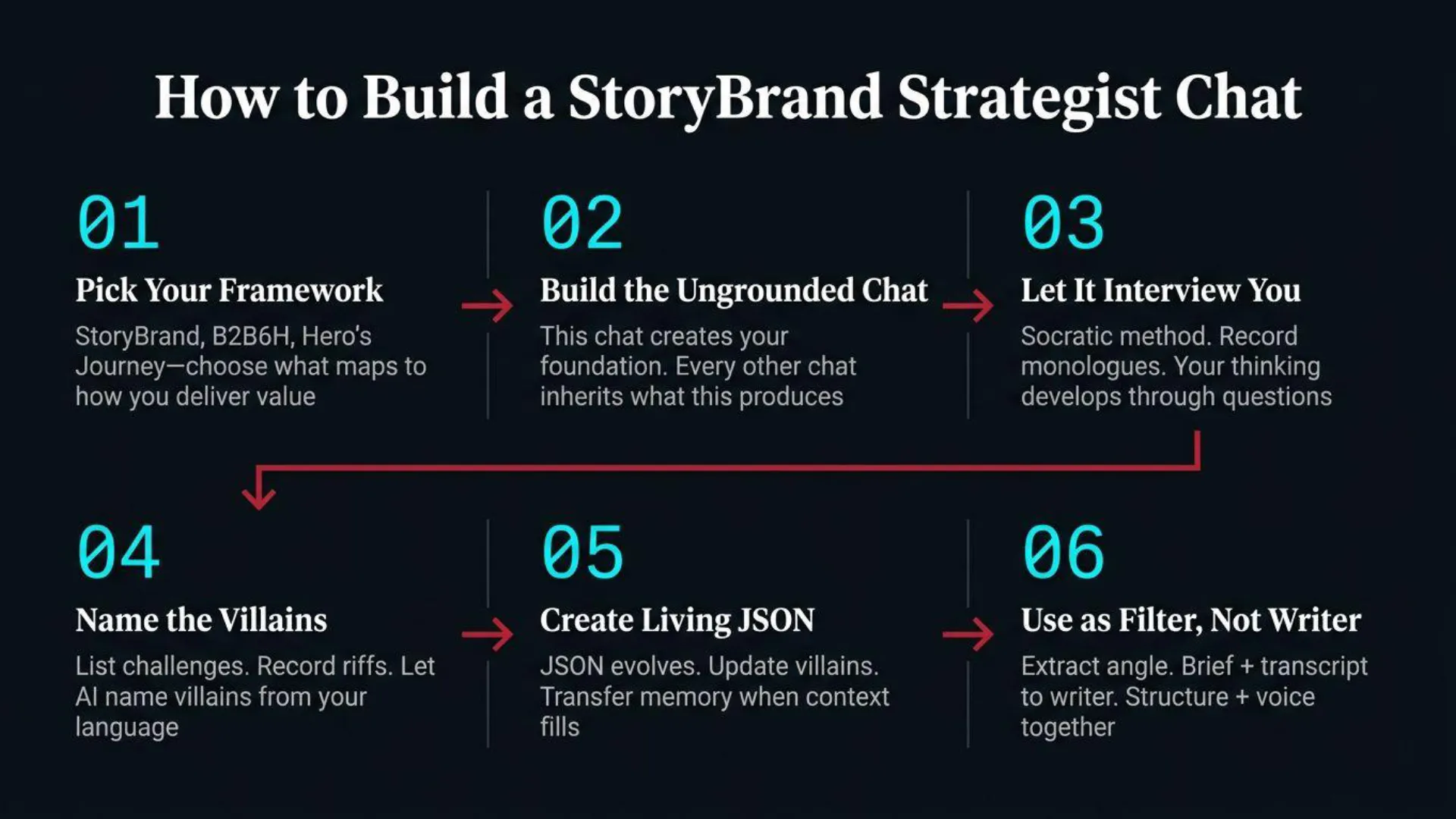
Step 1
Step 2
Step 3
Step 4
Brainstorm the Challenges and Let the AI Name the VillainsStart with a list of the common challenges your ideal customer faces. For Native 1, I had seven. Mother tongue influence. Vocabulary gaps. Confidence failures. Grammar exceptions. Generic textbook advice that did not match how English actually works in conversation. Write yours down first, then record a monologue on each one and let the AI pick up on the language you use.The naming happens in those riffs. When I was talking about vocabulary problems, I said something like: “their mind goes blank, just like a void in space.” The AI picked up on it and called it the Vocabulary Void. That stuck immediately. The Generic Textbook Golem came from students saying “my textbook never taught me that” or “my textbook taught me the opposite.” We just gave it an evil villain name and the Golem arrived.Some names the AI suggests will stick and some will not. You are the one who decides. But you would not have found those names by thinking about villains abstractly. They came out of the riffs about the actual problems.
Alt text: “A mother holding her child’s brain inside a protective bubble, personifying how first-language habits block new English patterns for Polish learners, representing the Mother Tongue Influence villain in the Native 1 StoryBrand framework.”
Step 5
Turn the Report into a Living JSON FileWhen the interview is done, the chat produces a StoryBrand report. Do not stop there. Have the chat convert it into a JSON file. A JSON file works better than a PDF because it is a living document. When a new villain appears — and they will appear, because your students keep showing you new ones — you go back to the strategist chat, tell it to update the vocabulary, and it gives you a new JSON file to replace the old one. This is where your brand vocabulary starts to evolve rather than staying fixed at whatever you knew the day you ran the first interview.
“villain”: {
“name”: “The Vocabulary Void”,
“challenge”: “Student loses the word mid-sentence and the mind goes blank”,
“origin_phrase”: “their mind goes blank, just like a void in space”,
“student_emotion”: “panic and humiliation in front of native speakers”,
“cure”: “horizontal vocabulary — multiple ways to say the same thing”
}
}
When the chat’s context window fills up over time and it starts to lose track of your earlier sessions, start a new chat from the latest JSON file. The new chat picks up exactly where the old one left off because the JSON holds everything the old conversation produced. You never lose the work. You just transfer the memory. This is how you fix AI amnesia without starting the whole process again from scratch.
Step 6
Use It as a Filter, Not a WriterThis is the distinction that took me the longest to see clearly. The StoryBrand chat is a filter. It takes a raw, unstructured monologue full of wild thought processes and extracts the angle, restates it more clearly than you said it, and hands it back to you as a brief. That is the “yes, that’s what I meant” moment. When you have a chat that finally gets your content, that gets your angle and understands it, you feel that recognition immediately.But the temptation is to make the filter write the post too. Do not do that. The filter does one job: turn the monologue into a brief. The writer receives that brief along with the original monologue transcript. Both of them together. The brief gives the structure. The transcript gives the voice. That combination is what makes the output sound like you rather than sound like a competent imitation of you.
↓
StoryBrand Filter Chat extracts the angle and produces the brief.
↓
You give the brief and the original transcript together to the writer chat.
↓
Your Grounded Writer Chat builds from your reasoning, not a summary of it.The full production line that this filter feeds into is documented in the Expert AI Content System. This step is the first cog. The others follow from it.
Why I Stopped Needing a Dozen Grounding Documents
The full starter kit and why it was heavy
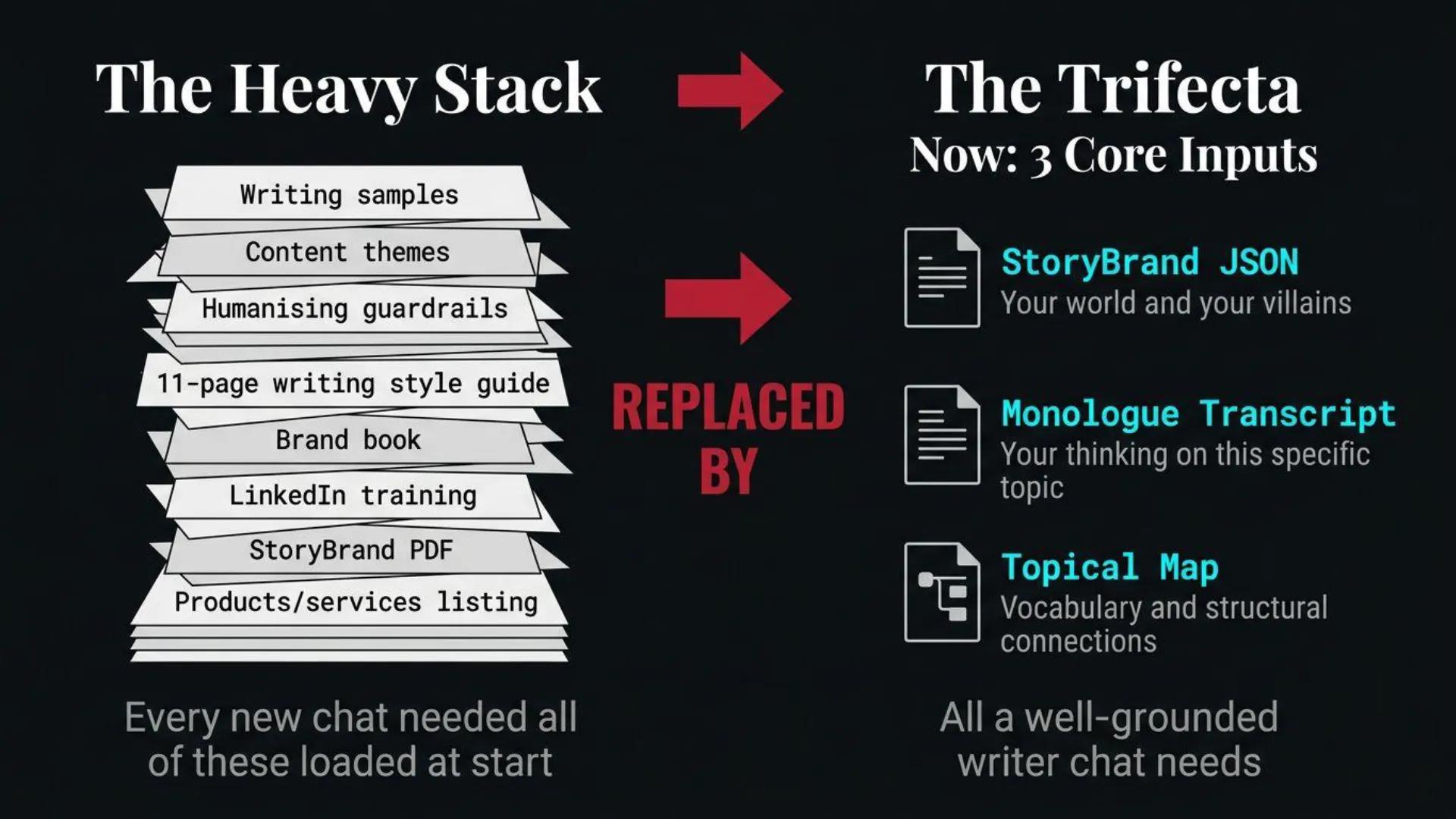
When I started writing with Native 1, I had everything. Writing samples. Content themes. A humanising guardrails document that listed every phrase AI uses that sounds like AI. These are words like discover, unlock, unleash the power, delve into the world of. I then grounded my writer chat with theese documents and instructed the writer never to use them.
I had an 11-page comprehensive writing style guide built by feeding my writing samples to a chat and having it analyse my tone, sentence structure, vocabulary, and organisational patterns. The starter kit also included a brand book, a LinkedIn guru training document for the repurposing chat, a StoryBrand report, and finally the Native 1 products and services listing.
It worked. But it was heavy. Every new chat needed all of those documents loaded at the start, and some of them were genuinely large.
How the topical map replaced most of the stack
Once the topical map existed, most of that weight went away. The semantic keywords in each node enforce the vocabulary for that specific post. The anchor text arrays tell the writer which phrases to use when linking. The bigIdea field tells the AI what each post exists to argue and why it belongs in the cluster. The map does not just store information — it enforces brand vocabulary across every post at the structural level, because it is built into the node data rather than sitting in a separate document the AI has to read separately.
Without a map, you still need the full document stack. The map replaces most of it because the vocabulary is encoded into the architecture itself. That is the distinction worth understanding before you start cutting documents.
The trifecta that replaced the full stack
My three working inputs now are the StoryBrand JSON for my world and my villains, the monologue for my thinking on this specific topic, and the topical map for the vocabulary and the structural connections. That trifecta is all a well-grounded writer chat needs to produce a first draft that sounds like me, teaches like me, and knows where it belongs in the architecture of the site.
For a full walkthrough of how the calibration step works in practice, the Miyagi Method covers the data hygiene chores that keep the writer chat from drifting over time. And for the topical map itself, the full methodology is at Topical Map for Semantic SEO.
StoryBrand Alone Was Not Enough
What StoryBrand gave and what it did not fix
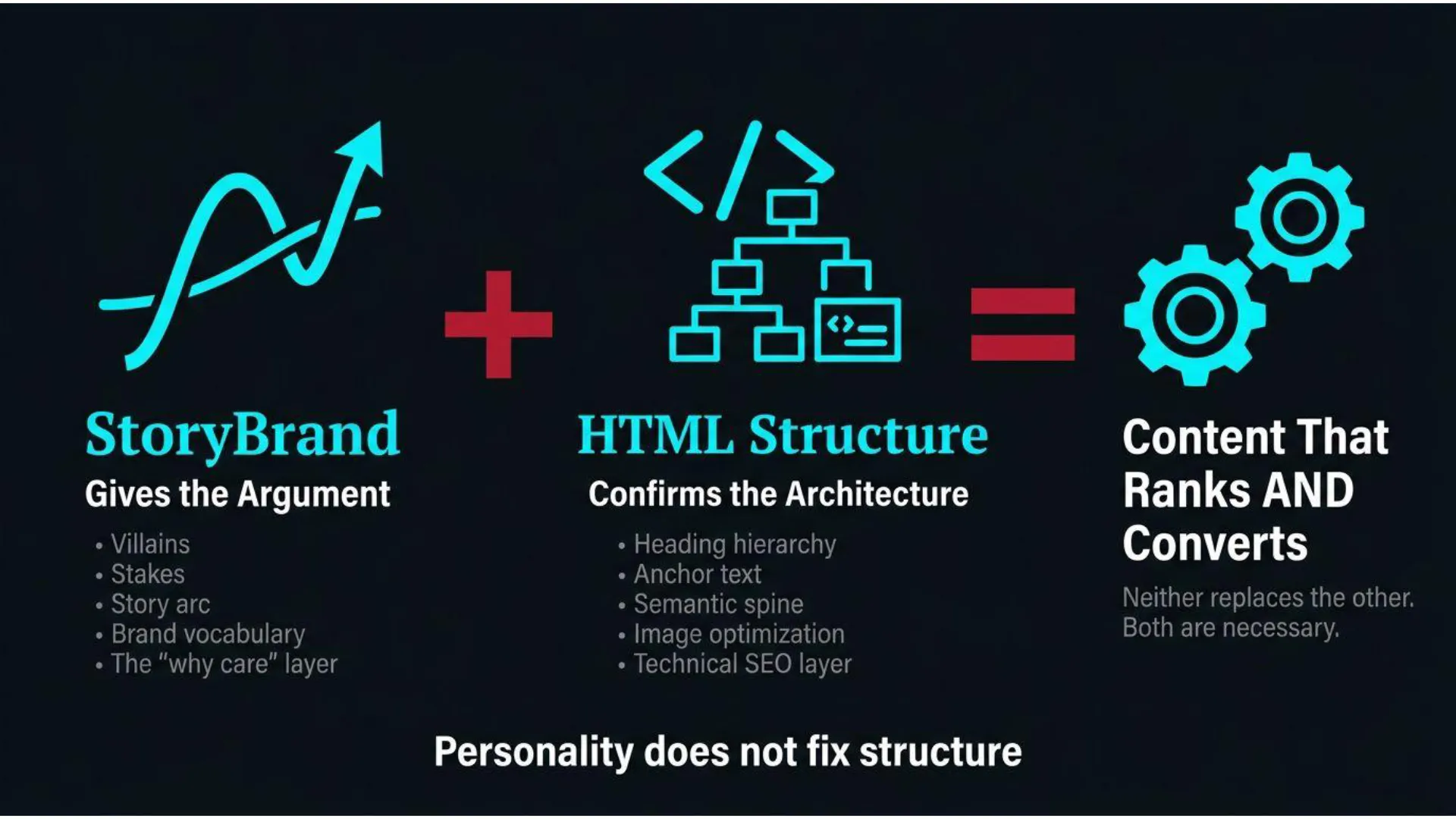
StoryBrand gave Native 1 color, flavor, personality, and a story. That blog now gets steady monthly traffic between 900 – 1200 and repeat visitors every month. I am proud of how that turned out.
But StoryBrand alone did not fix the production problem. For a long time after I developed the framework, my writing process still took ages. I had the right story. I did not have the system to tell it efficiently. I was still testing AI writers and rejecting them — and if you want the honest version of that experience, the AI writer origin story covers what those tools do when they have no context to work from.
Personality does not fix structure
Personality does not fix structure. Even the Native 1 lesson that earned the AI Overview citation needed its images checked and its heading hierarchy verified in the page source before it was structurally sound. StoryBrand gave it the argument. The HTML audit confirmed the structure matched. Both are necessary, and neither replaces the other.
If you want to check whether the structure of your pages is doing the job your content strategy is asking of it, the free HTML audit at audit.contentops.so runs a structural diagnosis on any page URL and returns a report on the heading hierarchy, anchor text, and semantic spine. That is the structural layer underneath the story.
Had I built my StoryBrand chat before I wrote my first grammar lesson, every lesson would have arrived with its villain already waiting.
Instead I spent years writing correct content that had no one to fight. The lessons were accurate. The students learned. But the posts had no stakes, no enemy, no reason to care beyond the grammar point itself. The Vocabulary Void was there the whole time, but I just hadn’t named it yet.
If I could do it all over again, I would start with the framework and the brand in mind, make a chat that is an expert in that framework, and have it guide me through the defining process before I wrote a single lesson. Everything you create from that point is joined up, consistent in messaging, and linked back to those original foundational ideas. That is what it means to have AI in your corner. It’s not an AI that knows StoryBrand, but an AI that knows your StoryBrand.
Manage Your Topical Map in the Mothership
The topical map is where your StoryBrand vocabulary, your monologue output, and your content architecture converge into a single machine-readable system. Build it, manage it, and inject it into every writer session from the ContentOps Mothership.
Frequently Asked Questions
Do I need to be StoryBrand certified to build a strategist chat?
No. The chat walks you through the framework one question at a time, and your stories supply the substance. I listened to the audiobook between teaching sessions and recommend it, but the interview process works whether you have read the book or not. What matters is that you bring real stories from your actual experience with your actual customers — the framework gives those stories shape, but the stories have to come from you.
Can I use a framework other than StoryBrand?
Yes. Pick the one that fits how you deliver value, then make it your first chat. The B2B6H framework, the Hero’s Journey, and Jobs-to-be-Done structures all work on the same principle — the chat becomes an expert in the framework and then interviews you inside it. StoryBrand is my choice because every lesson I teach is a story with a villain and a cure. Your framework choice should be similarly obvious from the way you naturally explain what you do.
How often should I update the JSON file?
Whenever a new villain, offer, or audience shift appears — then replace the old file entirely. The JSON is a living document, not a finished report. Every time you encounter a new student problem that does not fit an existing villain, go back to the strategist chat, describe the new pattern, have it update the vocabulary, and swap in the new file. Your brand vocabulary evolves through that process rather than staying fixed at whatever you knew the day you ran the first interview.
Can a custom GPT or Gem replace the strategist chat?
A custom GPT or Gem can host the strategist chat, but it cannot replace the interview that produces the report. The interview is a one-time process that extracts your specific stories, names your specific villains, and builds your specific framework. That work happens through the Socratic back-and-forth. The custom GPT or Gem is a useful place to store the resulting JSON and restart from it when the context window fills, but the interview itself has to happen first.